

Let’s get amped up to learn watt the heck is going on with 120 volt electricity (puns intended).
If you’re like most people, you don’t have any clue what watts, amps, and volts are, and you probably don’t care either. If that’s the case, this post is for you to inform you about the part that does matter for your life: why did my breaker trip (or in lamen’s terms: why isn’t my outlet or switch working)?
If you plugged something in or turned something on, and most of the things around you suddenly turned off, it’s helpful to know why, so you don’t keep making the same mistake. Usually, when the power in your room(s) suddenly goes out, it is because your electrical system in your home is working PROPERLY. It is YOU who failed. Let me explain.
In your home, each room or portion of your house is on a separate circuit. This means that a bunch of switches, lights, and outlets are all connected to each other similar to how you plug many strands of Christmas lights together in your Christmas tree. Those strands of lights are all connected to the same plug similar to how a “circuit” in your house has a bunch of outlets and lights connected to it. When you add too many things to one circuit, BOOM! Too much electricity in that wire causes an overload, and our electrical systems have safety devices built into them that prevents this overload from sparking into a major fire.
So what you really need to know is: how much is too much? It’s not really a matter of how many things are plugged in together. It’s more a matter of how much power those things need. For example, a hair dryer uses 1800 watts while a typical LED light bulb uses less than 10 watts. You can see that it would take 180 light bulbs to use the same amount of electricity as a hair dryer, so if someone leaves a light on, it’s actually negligible to someone who uses a hair dryer:)
An electric oven uses about 2000 watts, an electric stove uses about 2000 watts, and a portable space heater uses about 2000 watts. A home router uses about 5 watts, a tablet uses about 4 watts, and a tv uses about 25 watts. A coffee maker uses about 800 watts, and a toaster uses about 800 watts also.
As you can see, if it makes heat, it uses a lot of electricity, and if it doesn’t make heat, the energy consumption is pretty low. So what can you do with this new knowledge, smarty pants?
Let’s go back to the concept of a “circuit,” which is: many things all plugged into the same wire. A single circuit can only deliver a certain amount of electricity. It is common for each circuit in a home to either be 15 amps or 20 amps, and generally, each room has its own circuit. Again, this means that a single wire runs from your electrical panel to all the lights, outlets, and switches in a room, so all the electrical things in a room are connected together on the same circuit (like strands of Christmas lights plugged all together). A 15 amp circuit can power 1800 watts worth of things, and a 20 amp circuit can power 2400 watts of things.
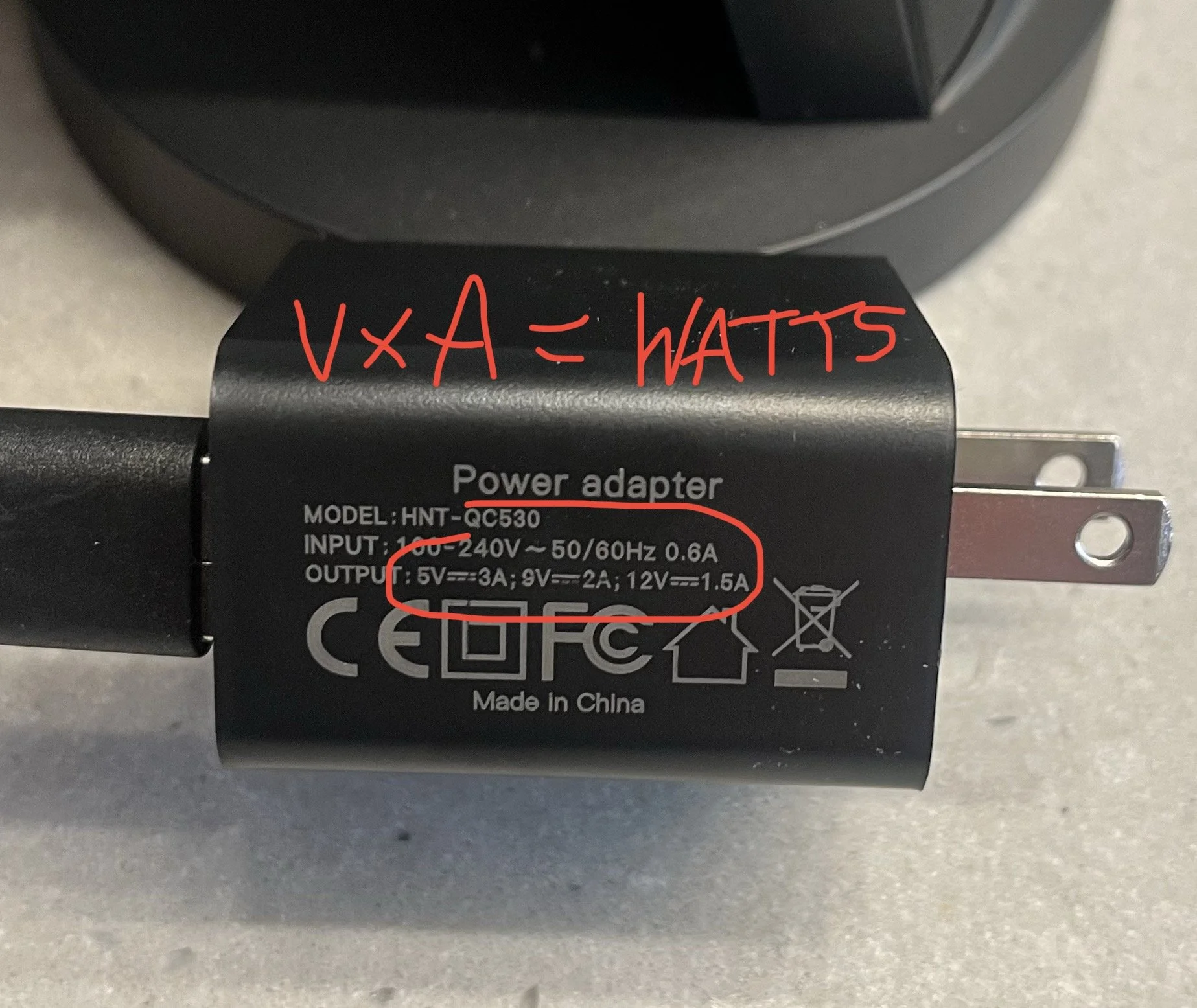
So how do you know how many watts a room can tolerate? Well, you don’t. By looking at the outlets and lights, there’s no way of knowing. So for sake of not plugging in too many things, just assume each room can tolerate approximately 2000 watts give or take. If you wanted to know for sure, you can look in your electrical panel, and the electrician likely labeled each switch in there. Each numbered switch has a little label on it for how many amps it is. So you can remember 15 amps equals 1800 watts, and 20 amps equals 2400 watts. Or the actual formula is volts times amps equals watts (VA=W). I hope I didn’t lose you there.
Even if you have done the extraordinarily difficult and laborious task of opening your electrical panel to check for how many amps a certain room can handle, that still doesn’t give you an exact answer. The reason is that sometimes more than one room are all wired together on a single circuit, or sometimes one room might have several different circuits that serve it. Also, sometimes there is a “dedicated circuit” for certain outlets such as a refrigerator, electric stove, or other item that sucks a lot of power. This means that just one outlet has its own circuit which is separate from everything else in that room. So to truly know which outlets and lights are in a certain switch/circuit in your electrical panel, you’d have to turn on everything in your house (and plug in something to every outlet), and then you’d have to flip a breaker switch in your electrical panel to take note of which items turn off. Usually the little label your electrician put on your panel is not that descriptive.
Why isn’t everything just on one circuit? Copper, safety, and convenience. If there’s a problem with too much electricity flowing through a circuit, that gets dangerous. It’s better if sparks go flying in less places instead of more places. Also, if too much electricity passes through a particular circuit, it could actually fry the wire (and the stuff plugged into the various outlets connected to it). It is easier to diagnose the problem (and less damage occurs) when you know which circuit had the problem based on which switch in your electrical panel flipped. If there’s too much electricity flowing through a circuit, why not just make the wires bigger to accommodate higher levels of flow? That would actually work just fine, BUT, bigger wires = more copper, and more copper = more money (and it’s more difficult to work with thicker wires for the electrician). Basically, it’s just safer and easier if the wires are smaller, and this is facilitated by having many small circuits instead of just one big circuit in a home.
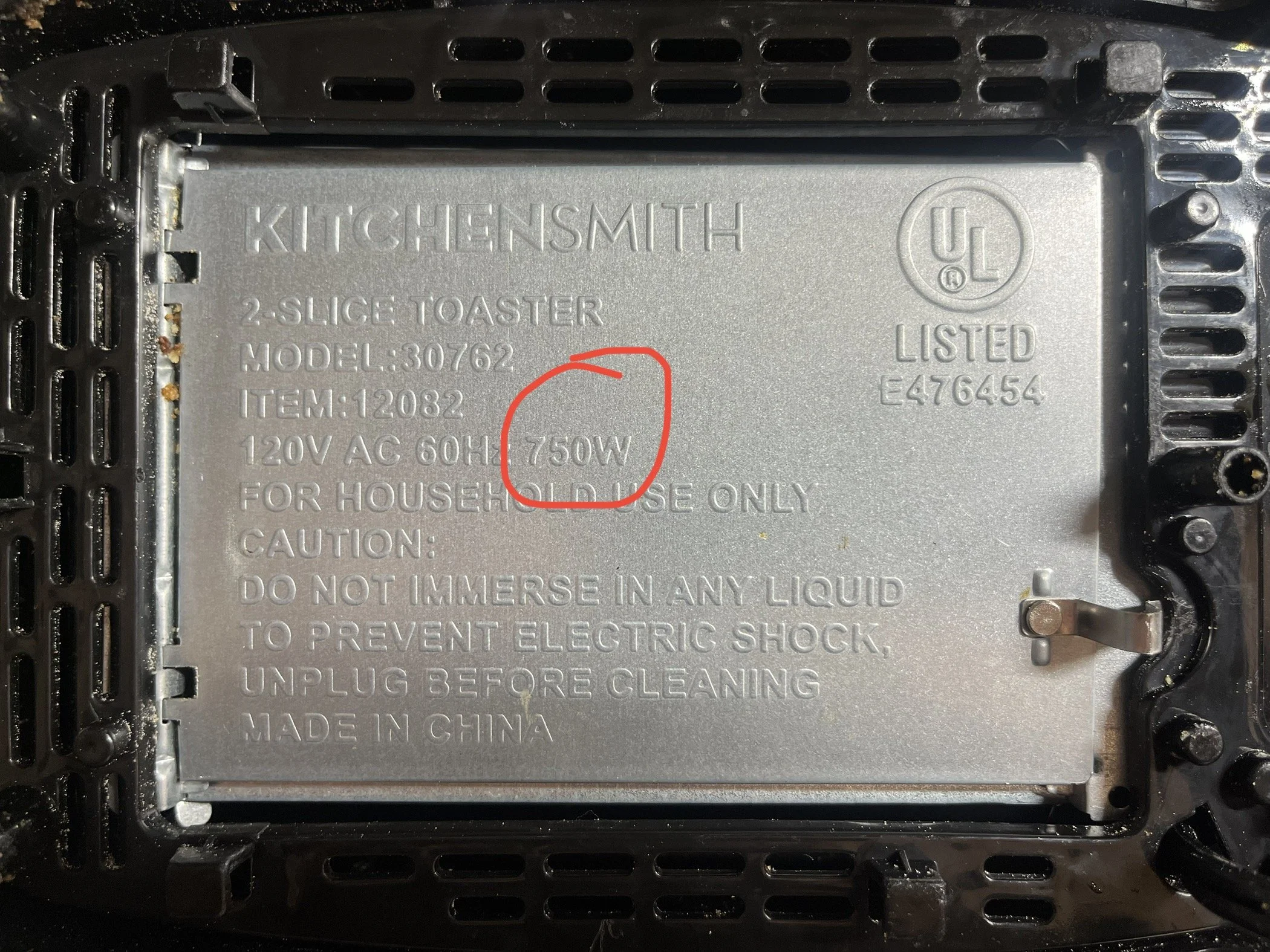
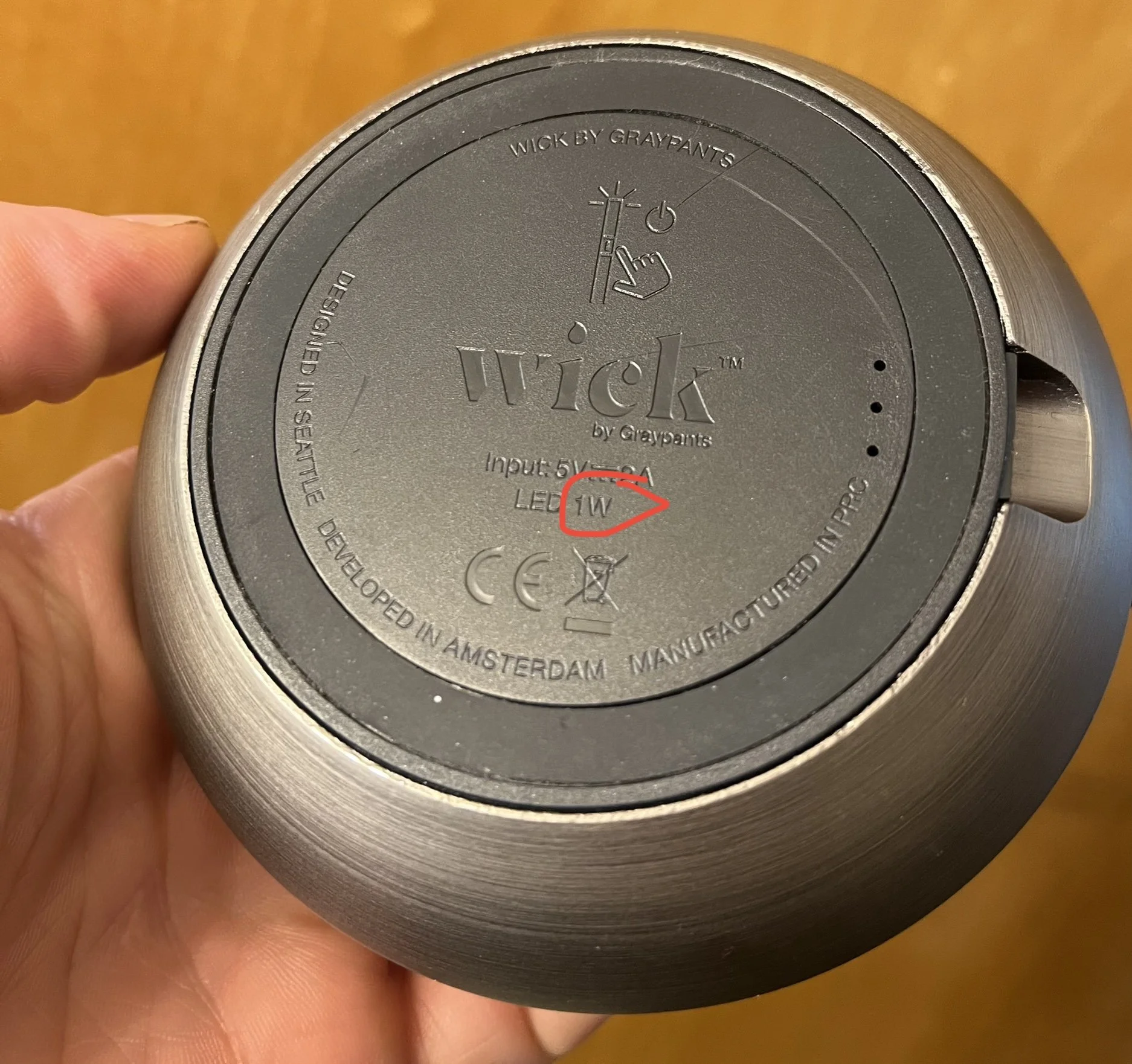
Ok, so maybe you understood this basic explanation of how electrical things work in a home, but how do you know how many watts something is so you can actually try and keep your circuit at a manageable 1800 watts or 2400 watts? It’s pretty simple by just keeping in mind that things that make heat use a lot of watts, and other things generally don’t - so just use good, reasonable judgement. If you’re more of a calculation geek, you can look at the bottom or back of most products, and it will have a sticker or embossed label that lists the wattage like the example images below. Once you know this, it becomes interesting and more responsible to know the cause and effect of your own electricity usage habits.
If you’d like to learn more about our design process, visit www.josharch.com/process, and if you’d like to get us started on your project with a feasibility report, please visit www.josharch.com/help