
A Message to Garcia (and Josh’s Commentary On It) by S. Joshua Brincko

I’ve been told the US Navy makes its sailors read this witty story written by Elbert Hubbard in 1899 to teach them how to think big and focus on getting the job done. I’ve always liked the underlying message in most of the essay, which is basically: quit making excuses, and just flipping start doing the thing that you’re supposed to be doing. Since the writing is outdated, I pasted the original with my commentary in italics, so you can see what it means (to me) in today’s context:

A Message to Garcia, by Elbert Hubbard (1899)

In all this Cuban business there is one man stands out on the horizon of my memory like Mars at perihelion.

He is basically saying he can only think of one guy that acts appropriately since it is such a rarity for people to actually “do as they are told.”

When war broke out between Spain and the United States, it was very necessary to communicate quickly with the leader of the Insurgents. Garcia was somewhere in the mountain fastnesses of Cuba - no one knew where. No mail or telegraph could reach him. The President must secure his cooperation, and quickly.

There’s a guy named Garcia hiding in Cuba somewhere that the President of the USA must deliver an urgent letter to, and nobody knows exactly where Garcia is.

What to do!

Someone said to the President, “There’s a fellow by the name of Rowan will find Garcia for you, if anybody can.”

Rowan is the guy who can simply deliver a letter without F-ing it up. Rowan is who we all should strive to be since he can simply “do what he is told.”

Rowan was sent for and given a letter to be delivered to Garcia. How “the fellow by name of Rowan” took the letter, sealed it up in an oil-skin pouch, strapped it over his heart, in four days landed by night off the coast of Cuba from an open boat, disappeared into the jungle, and in three weeks came out on the other side of the island, having traversed a hostile country on foot, and having delivered his letter to Garcia, are things I have no special desire now to tell in detail. The point I wish to make is this: McKinley gave Rowan a letter to be delivered to Garcia; Rowan took the letter and did not ask, “Where is he at?”

Rowan just simply did it. He didn’t ask anyone how to do it. He didn’t ask where to take it. He never asked why. He simply figured it out himself and got the job done. He didn’t make anyone wish they had just done it themselves. He made the delivery of a letter into his own problem and nobody else’s. When the President asked him to do it, he just did it. The President did not need to wonder if it would get done or if it would be done successfully. The President knew that if he told Rowan to do it, then the task was as good as being done, and the President could assume as much. No further followup from the President is required. The President has 100% faith in Rowan.

By the Eternal! There is a man whose form should be cast in deathless bronze and the statue placed in every college in the land. It is not book-learning young men need, nor instruction about this or that, but a stiffening of the vertebrae which will cause them to be loyal to a trust, to act promptly, concentrate their energies; do the thing - “carry a message to Garcia!”

Rowan is the perfect teammate, and a statue of Rowan should be erected to remind the rest of us to be just like Rowan.

General Garcia is dead now, but there are other Garcias. No man, who has endeavored to carry out an enterprise where many hands were needed, but has been well-nigh appalled at times by the imbecility of the average man - the inability or unwillingness to concentrate on a thing and do it.

Although this letter is already delivered, there will always be future tasks that still need to be accomplished, and when those tasks are assigned, the person completing the task should remember the diligence of Rowan and not defer to become the average sort of person who is too lazy to be resourceful and simply figure out on their own how to do the task assigned to them.

Slipshod assistance, foolish inattention, dowdy indifference, and half-hearted work seem the rule; and no man succeeds, unless by hook or crook, or threat, he forces or bribes other men to assist him; or mayhap, God in His goodness performs a miracle, and sends him an Angel of Light for an assistant.

Most people are not like Rowan. They pawn their tasks back to the person who ask them to do it, and the assigner regrets ever assigning it to the assignee. It would have been much easier for the assigner to just do the task themselves instead of thinking someone else could do it instead. We have all heard the phrase, “if you want it done right, do it yourself.” There’s some truth to this unfortunately. We have grown too accustomed to bad service, and we have lost faith in others since there’s no accountability. The thing we need to realize is this: WE LEARN BY STRETCHING OURSELVES TO DO NEW THINGS. We need to push our boundaries to become a better person.

You, reader, put this matter to a test: You are sitting now in your office—six clerks are within your call. Summon any one and make this request: “Please look in the encyclopedia and make a brief memorandum for me concerning the life of Corregio.”

Try testing the theory. Go ask someone this simple question: “I need to know if Florida or Ohio is further west.” Chances are nobody will just find the answer without first asking: why do you need to know, or I think it’s Ohio (without actually looking up the facts).

Will the clerk quietly say, “Yes, sir,” and go do the task?

Haha. Good luck finding someone so cooperative in this era. The next few statements are still relevant today (120 years after the writing), except that we don’t use encyclopedias anymore…enjoy:

On your life, he will not. He will look at you out of a fishy eye, and ask one or more of the following questions:

Who was he?

Which encyclopedia?

Where is the encyclopedia?

Was I hired for that?

Don’t you mean Bismarck?

What’s the matter with Charlie doing it?

Is he dead?

Is there any hurry?

Shan’t I bring you the book and let you look it up yourself? What do you want to know for?

And I will lay you ten to one that after you have answered the questions, and explained how to find the information, and why you want it, the clerk will go off and get one of the other clerks to help him find Garcia - and then come back and tell you there is no such man. Of course I may lose my bet, but according to the Law of Average, I will not.

Now if you are wise you will not bother to explain to your “assistant” that Corregio is indexed under the C’s, not in the K’s, but you will smile sweetly and say, “Never mind,” and go look it up yourself. And this incapacity for independent action, this moral stupidity, this infirmity of the will, this unwillingness to cheerfully catch hold and lift, are the things that put pure socialism so far into the future. If men will not act for themselves, what will they do when the benefit of their effort is for all?

Acting for yourself is good, but acting for the greater good is truly noble.

A first mate with knotted club seems necessary; and the dread of getting “the bounce” Saturday night holds many a worker in his place.

Advertise for a stenographer, and nine times out of ten who apply can neither spell nor punctuate - and do not think it necessary to.

Can such a one write a letter to Garcia?

“You see that bookkeeper,” said the foreman to me in a large factory.

“Yes, what about him?”

“Well, he’s a fine accountant, but if I’d send him to town on an errand, he might accomplish the errand all right, and, on the other hand, might stop at four saloons on the way, and when he got to Main Street, would forget what he had been sent for.”

With Facebook…nothing really gets done. The rest of the essay is more satirical, and I will not comment further, but here it is for your reference. As you go on for the rest of your day (and life), remember to be Rowan and find your own Garcias :)

Can such a man be entrusted to carry a message to Garcia?

We have recently been hearing much maudlin sympathy expressed for the “down-trodden denizen of the sweat shop” and the “homeless wanderer searching for honest employment,” and with it all often go many hard words for the men in power.

Nothing is said about the employer who grows old before his time in a vain attempt to get frowsy ne’er-do-wells to do intelligent work; and his long patient striving with “help” that does nothing but loaf when his back is turned. In every store and factory there is a constant weeding-out process going on. The employer is constantly sending away “help” that have shown their incapacity to further the interests of the business, and others are being taken on. No matter how good times are, this sorting continues, only if times are hard and work is scarce, this sorting is done finer - but out and forever out, the incompetent and unworthy go. It is the survival of the fittest. self-interest prompts every employer to keep the best-those who can carry a message to Garcia.

I know one man of really brilliant parts who has not the ability to manage a business of his own, and yet who is absolutely worthless to anyone else, because he carries with him constantly the insane suspicion that his employer is oppressing, or intending to oppress, him. He can not give orders, and he will not receive them. Should a message be given him to take to Garcia, his answer would probably be, “Take it yourself.”

Tonight this man walks the streets looking for work, the wind whistling through his threadbare coat. No one who knows him dare employ him, for he is a regular firebrand of discontent. He is impervious to reason, and the only thing that can impress him is the toe of a thick-soled No. 9 boot.

Of course I know that one so morally deformed is no less to be pitied than a physical cripple; but in your pitying, let us drop a tear, too, for the men who are striving to carry on a great enterprise, whose working hours are not limited by the whistle, and whose hair is fast turning white through the struggle to hold the line in dowdy indifference, slipshod imbecility, and the heartless ingratitude which, but for their enterprise, would be both hungry and homeless.

Have I put the matter too strongly? Possibly I have; but when all the world has gone a-slumming I wish to speak a word of sympathy for the man who succeeds - the man who, against great odds, has directed the efforts of others, and, having succeeded, finds there’s nothing in it: nothing but bare board and clothes. I have carried a dinner-pail and worked for a day’s wages, and I have also been an employer of labor, and I know there is something to be said on both sides. There is no excellence, per se, in poverty; rags are no recommendation; and all employers are not rapacious and high-handed, any more than all poor men are virtuous.

My heart goes out to the man who does his work when the “boss” is away, as well as when he is home. And the man who, when given a letter for Garcia, quietly takes the missive, without asking any idiotic questions, and with no lurking intention of chucking it into the nearest sewer, or of doing aught else but deliver it, never gets “laid off,” nor has to go on strike for higher wages. Civilization is one long anxious search for just such individuals. Anything such a man asks will be granted; his kind is so rare that no employer can afford to let him go. He is wanted in every city, town, and village - in every office, shop, store and factory. The world cries out for such; he is needed, and needed badly—the man who can

Carry a message to Garcia.

If you’d like to learn more about our design process, visit www.josharch.com/process, and if you’d like to get us started on your project with a feasibility report, please visit www.josharch.com/help

Small Lots Equal Cool Houses by S. Joshua Brincko

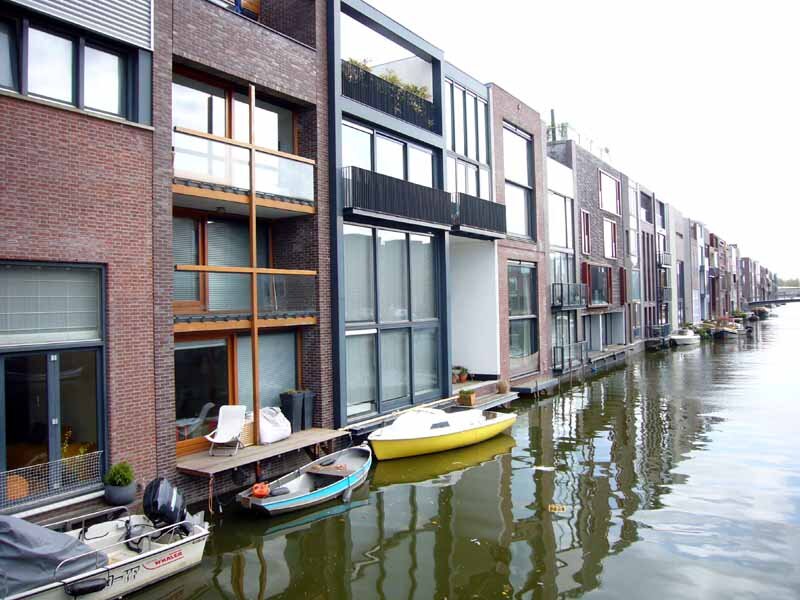
The typical lot in many cities is a rectangle with 5’ side yard setbacks and 20’ or so front/rear yard setbacks. This is space on a property where you’re not allowed to build the house with the purpose to leave open space. This results in a buildable area that is exactly the same for every lot in a neighborhood, and this results in a lack of variety.

Occasionally you have that odd-ball lot in a city with a weird shape or size which is really common in West Seattle where I live and work. A quirky corner lot, or leftover space from previous subdivisions, a tiny or narrow parcel, or something on a steep slope that is tricky for construction creates a unique design opportunity. These differences in lot configurations require architects to think creatively to envision design solutions that conform to the tricky constraints of the unique lots. Similar to how sloped ceilings in attics can create charming interior spaces, small lots can result in unique and inspiring homes that positively challenge the norm of the boring, repetitious, cookie-cutter neighborhoods we see all to much. As an architect who is an expert in designing innovative homes, I excel and am passionate about the creative challenges that come with designing homes on small lots.

Here’s some cool homes we have seen by some talented architects that have been the result of unique and small lots that we commonly reference when we design unique homes:

By Prentis Hale

By Prentis Hale

By Unknown

By Unknown

By George Suyama

By George Suyama

By Unknown

By Unknown

By Unknown

By Unknown

By Unknown

By Unknown

Amsterdam canal

Amsterdam canal

If you’d like to learn more about our design process, visit www.josharch.com/process, and if you’d like to get us started on your project with a feasibility report, please visit www.josharch.com/help

Surveys: do you need one? by S. Joshua Brincko

As explained in the short video above, a survey is a drawing prepared by a licensed surveyor that documents the exact location of your property lines. To learn more, read the post below, and also watch the more thorough video at the end of the post.

Why are surveys important, and why do you need one?

Knowing where your property line is located is important if you are building a new structure or adding onto one. If you want to expand your kitchen into your back yard, you first need to know if you are ALLOWED to build that addition in the space that’s available in your back yard. A surveyor can determine exactly where your property lines are located, and your architect can use that to determine how far away your house must be from each property line. This is known as a setback. Different cities and different zoning classifications have different setbacks for buildings, decks, and garages from front, side, and rear property lines. There’s also required setbacks from things like steep slopes, wells, bald eagle nests, septic tanks, streams, etc. A surveyor can accurately document these things, so you can be sure your project gets built legally in an area that the city allows. You wouldn’t want an inspector to require you to tear down your home because it’s built too close to a property line.

Let’s expel a myth…please!

YOUR FENCE IS NOT YOUR PROPERTY LINE.

YOUR SIDEWALK OR YOUR CURB IS NOT YOUR PROPERTY LINE.

Or when the old guy that used to live there said, “the rock by the cedar tree is on the property corner,” THAT DOESN’T MEAN A DAMN THING.

The building department will not give a rip about where you think your fence is, or whatever the old guy in the neighborhood told you. A survey is the only legal document that can determine (and prove) where your property lines are, and most importantly, how far your house is located from those property lines. Without a survey, your architect cannot know exactly where to design your project, and the building department will not know if they can approve your drawings to issue a permit for construction.

Another reason a survey is often required would be to document lot coverage. Lot coverage is a percentage of your property that is allowed to be covered by buildings, decks, patios, or some combination thereof. A surveyor locates the exact locations of all these items on a property, so your architect can calculate how much surface area each item is. For example, in Seattle, you are allowed to cover up to 35% of your typical 5000 SF property with structures. Knowing the exact size of the existing house, garage, shed, trellis, deck, etc will enable your architect to know if you are already exceeding your maximum lot coverage or not. Without this information, you cannot be certain that there is any remaining area that is allowed to be covered with a bigger house.

Surveyors also document trees and topography (the slope of your land). This is important because there are some restrictions on removing certain trees, required setbacks from some trees, and the minimum amount of trees (and tree sizes) your property is required to have since trees do a pretty good job of sucking up rainwater to prevent overburdening the sewer systems from stormwater runoff. Knowing the slope of your land also helps your architect to design a building that appropriately fits into the hillside while not requiring too much soil to be excavated and removed (which is very costly). Additionally, some slopes are classified as “steep slopes” when they exceed a certain height or percentage of slope, and your architect needs to know where the exact top and bottom of those slopes are located. The required setbacks (buffers) from those slopes can be maintained with your new project. We also use surveyors to document the height limit of your house, and this is determined by knowing the topography of your land since the maximum height limit is determined by calculating the average height of the ground.

Lastly, a surveyor also documents easements. These are portions of your property that are generally used by someone other than the property owner. For example a neighbor might have a drain pipe going through your yard, and there might be an easement documented that does not allow you to build within that area. Again this is important information your architect needs, so he or she will be able to design a project for you.

In some instances a survey is not required. This takes a bit of discretion and risk, but if your property has no slope and the building will be nowhere near your property lines, nowhere near the maximum lot coverage, and not even close to the maximum height, then your architect and building department can work with certainty knowing that the requirements for these items will not be exceeded. So how much tolerance is there? In my experience, if you are required to build at least 5’ away from a property line, and you are proposing to build 7’ away, then that additional 2’ buffer will usually suffice. It’s sort of like speeding: 5 or 10 mph over the speed limit, and you’re likely fine - but you never know.

Most properties have never been surveyed, so nobody really knows where the property lines are located until a surveyor calculates and measures it. They do this by triangulating other known points that have been previously documented on other surveys which could be several blocks away. They work their way back to your property from those other landmarks using trigonometry and expensive GPS enabled equipment with lasers and other fancy technologies to make long measurements. They don’t bust out a tape measure for this stuff. They get accurate within 0.01’ tolerance (I’ve been told).

This gets increasingly important in older cities like Seattle where most homes were built before there were rules governing setbacks. Your existing house may already be built over your setback line. This is called being “grandfathered” or an “existing nonconformity.” Don’t be alarmed - actually be glad. If it was built before the rules existed (and if you and your architect can prove it), then you can continue to keep your house over the setback line. And more importantly, in some of these circumstances, you are actually allowed to build your new addition along the same continuation of that line. In other words, you may be allowed to continue to break the rules with your new addition too! Your architect can help advise you on whether or not that is an option.

What should you expect to pay for a survey? This depends on what you need documented, how big your property is, how complex it is, and whether or not it’s easily accessible. I’ve seen surveys range from $1500 to $10,000. They are usually under $5000 though. A survey is a very valuable investment that enables your architect to properly design your project and keep you compliant with the land use codes. The surveyor provides the architect with a pdf file and an autocad file that he or she can work with on the computer with 100% accuracy. At a minimum, the architect needs a survey with the property lines and perimeter of the existing structures drawn, and in most cases, the trees, slopes, and easements must be documented, so your architect may determine required setbacks, height limit, and maximum lot coverage calculations.

The full video below takes a deeper dive into all things surveys, and it includes a basic tutorial on how to read a survey drawing.

If you’d like to learn more about our design process, visit www.josharch.com/process, and if you’d like to get us started on your project with a feasibility report, please visit www.josharch.com/help

You get 2 out of 3 by S. Joshua Brincko

IMG_1188.jpg

When you go out to eat, you hope for tasty food, for a good price, with good portions/service. We work hard to earn our money, so if we are going to pay someone to cook a meal for us, we expect to be treated well, not need to clean our own dishes, and be happy with the food they feed us. If we want really high quality gourmet food, there is an expectation that it will cost more and generally come with attentive service. I don’t think anyone expects a gourmet meal with good service to also be cheap. You get 2 out of the 3 things. Good food, good service, not so good price at the fancy restaurant. That is fine. It’s expected. You are paying more for quality. If you just want an average meal at an average restaurant, you might expect the portions to be bigger, the price to be lower, but the food to be just ok. That is fine too. You get 2 out of the 3 things. Good price, good portions, but not the best food at the fast food place. You are paying less for lower quality.

This analogy translates into construction as well. When you hire a builder that does really high quality work, you expect that work to cost more. Or if you want the work to be done really quickly, you should also expect it to cost more (to compensate for the rework that will need to happen as the sequencing of construction steps cannot be controlled, and the builder needs to effectively pay to build some things twice since they could not measure twice and cut once - as the saying goes). If you want really good service, you would also expect that to cost more. If you want a lower price, you should therefore also expect the quality and service to be lower.

When one of the three factors of price, quality, and service is better than the others, the other factors will inevitably be lower. The saying goes, “you get what you pay for.” This is very true in construction. I see this very often. When people choose the lowest priced builder, they are often disappointed when they realize the quality is not great or they don’t have the opportunity to make design or detail decisions during the build. This should be expected. When paying a premium for a really good builder, you can also expect to have the ability to provide feedback for construction details along the way, so you can get exactly what you want. Higher quality (higher priced) builders, offer this level of service, while lower quality (lower priced) builders simply build what suits themselves (their own interpretation of what they think should be built). Client input derails their process and causes the price to go higher.

We work with many different builders who work at different levels of quality, and we advise our clients on which builders are best suited to meet their goals. Some clients expect a high level of detail and others could care less. As we get to know our clients during the design process, we get a pretty good idea of what our clients expect.

If you’d like to learn more about our design process, visit www.josharch.com/process, and if you’d like to get us started on your project with a feasibility report, please visit www.josharch.com/help

Don’t be your own virus by S. Joshua Brincko

Are you happy to have your job? A few weeks ago, you may have taken your job for granted. In the height of our prosperous economy, things were busy, we had options, and we all expected a paycheck. Now that the world has been turned upside down with a pandemic, there is so much uncertainty. Will you get laid off? Have you already been laid off? Will your clients quit doing business with you? 

These are all questions we are all certainly asking in these times, and for many of us, the answer will be yes to one or more of those. Let’s examine different situations. 

Starting with retirees who typically don’t have to worry about an income. They already made the choice to retire because they had the financial security to live out their days on their savings or maybe a pension or government program. For many retirees, they will continue to get those paychecks no matter what happens. Sit back, relax (in quarantine), and nothing really changes for the most part financially. Actually, the cost of goods and services may go down, so this type of person may actually benefit. Other retirees who worked in the private sector for smaller employers are generally living off of their savings. With the hit to the stock market, their savings may look grim, and a lifestyle adjustment like returning to work (if they can get a job) or reducing typical expenses may be needed. This is a very rough situation to be part of. In either case, these retirees are at an age where they may feel a certain paranoia about the seriousness and complications that can arise from the virus that other younger folks are generally capable of fighting off. This uncertainty makes life challenging - even if finances are ok. 

For those who are considered essential workers, this time may actually feel ok financially. Sure, the reality of the stock market crashing is not a great feeling, but we are all in it together. These people know their skills are needed to keep basic human needs flowing, so the paychecks will keep coming. That is one major stressor that may be absent, but it is likely shadowed by a different stressor: since they can’t hunker down in isolation, they are making themselves vulnerable at the workplace of contracting a potentially deadly virus they can pass onto their loved ones and random people unknowingly. The thought of getting or causing a serious illness would constantly weigh on the conscience. Imagine your family struggling with the challenges of being in quarantine and you come home to them every day from your job at a hospital which is essentially a Petri dish. That’s a major burden every day. 

Another group of people are those who work for big corporations that have the ability to carry the overhead expenses of keeping their workers employed even though they are not making much money as a company. This group of people can go on with their sense of security knowing they will get a paycheck on payday. They just need to contend with the boredom of social distancing and possibly less of a workload to keep them busy during the work(from-home)day. If the virus sticks around, and the economy doesn’t recover for awhile, some of these workers will eventually be laid off, and they will be left without financial security and will be even more bored in their isolation. This could potentially become a large part of our population.

There is another group of people who is already in a vulnerable workforce such as a small business that is non-essential, and the doors have been closed by government mandate. These folks are already inevitably laid off and experiencing the stresses of financial insecurity and a job market that doesn’t have any current openings. It’s a grim outlook. 

The final group of people are those who work for a business that is adapting. Maybe your role at your job is to do something completely different than you know or are supposed to be doing. Are you ok with that? Can you handle it? It may be weird, but you are likely just happy you have a job and can earn an income for you and your family. This is a “whatever-it-takes” personality, and this is what we all need right now. Personally, I grew up in a place that had a fragile economy, and this sense of just being happy to have a job was instilled in me. If you had the opportunity to take on more work, more hours, a side job, etc… you did, and you were happy to do it. Money was not easy to come by, so you seized all opportunities (or somebody else would). This is the mindset I have now and have always had.

We need to make the best out of a bad situation. By doing nothing, we won’t get anywhere. By figuring out something productive we can do, we can make a positive impact. Instead of being bored, be proactive. Write a novel. Rethink how you do your job. Plant a garden. Read the municipal codes and regulations for your job and city to understand how your job affects them and is affected by them. Call old friends. Cook meaningful meals. Take apart old electronics and try to understand how they work. Do some online classes and earn a degree or license. Plan for what you will do differently the next time this happens. Enjoy your family. Read proposed legislature in your state or city. Exercise. Build something. Sand the finish off of an old chair and redo it. Take pride in something. Take pride in yourself. Shift your thinking. 

In the big picture, you have the chance to come out of this ahead. 

If you’d like to learn more about our design process, visit www.josharch.com/process, and if you’d like to get us started on your project with a feasibility report, please visit www.josharch.com/help

STFI Permits (known as “stiffies”) by S. Joshua Brincko

Getting a building permit in Seattle is no easy task - especially with their online portal that works less than perfectly (as outlined in a Seattle Times article). Luckily, there’s a process known as a subject to field inspection permit, called an STFI or a “stiffy” in our trade. This is an over-the-counter permit that you can get for small projects with a limited scope of work. It sounds great, but it is not without its own problems.

First of all, the city of Seattle’s online permit portal has proven (in our experience) to be ineffective in getting STFI permits. This means you need to print your drawings, go downtown to the building department, park, wait in line, and submit the plans in person to a plans reviewer who has the task of trying to shut down your attempt of getting a permit that day. You would think with their busy workload that the building plans reviewers would want to try to approve people’s permit applications, so they would not pile up in their endless queue of projects to review. When a stiffy is not accepted for review, it is sent into “full plan review” usually because the city thinks there’s something too complicated about it for them to quickly review “over-the-counter.” This means it goes in a “pile of drawings” that usually takes months to just BEGIN reviewing. Stiffies are good Full plan review is bad (if you care about time).

When you meet with the plan reviewer face to face, you have the opportunity to explain your project in more detail than electronically distributed drawings ever could. The in-person STFI process gives you the opportunity of not getting shut down so quickly like you do when you submit plans on their web portal electronically. Unfortunately, the building department uses strange logic that is commonly contrary to the language in their land use code, and this causes most people to walk out of the building department without their STFI permit in hand (which results in wasted paper, wasted printing fees, and wasted half a day of work).

For example, one of the project types that qualifies for a stiffy is a roof replacement. I have done this many times, but one particular time the building department would not issue the STFI permit because we were proposing to replace a roof on an existing 6 foot high walls, but we proposed to make those substandard walls a few inches higher so they could be a conventional height before putting the new roof on them. There are no rules against this. We even had structural engineering prepared to show how to properly build it, but the building department would not approve it. Instead they wanted us to keep the walls 6 feet high. I asked them to show me which code prohibited them from approving a stiffy in this situation, but they did not have an answer. I walked out of there with a permit that day.

In another example, we attempted to get an STFI permit to build a one story structure with high ceilings. One story structures are allowed to be permitted as an STFI, but the building department would not allow this particular project to be approved as a stiffy because they said the ceilings were too high. I asked what the threshold for ceiling height was since there were none listed in the requirements, and the reviewer responded “10 or 11 feet sounds good.” I asked what this was based on, and they had no response. He just told me that’s what they have done in the past. I told him I didn’t care what they’ve done in the past, and I only care about what the rules are, so I could follow them. I also walked out of there with the permit that day. Most people would have buckled under the pressure of “authority” and left without a permit.

Every time I have applied for an STFI permit, I have been insanely prepared to cite city ordinances by code number to argue with a city employee who is being unreasonably difficult, or lazy, or unknowledgeable about the rules that they enforce. It is simpler for the city employee to just deny an application than it is for them to do their job and process the approval. Unfortunately this just leads to more people applying for the full permit review process instead of the same-day STFI process. This just leads to longer review times and overburdens the system when most of these projects should have just simply been approved as an STFI.

I am constantly fighting on behalf of my clients to try to expedite permit review timelines, and STFI permits are one way that I do this. Sometimes we have to make two attempts on a project: One attempt is to discover what sort of rediculous roadblocks a city employee will come up with, and the other attempt is with a revised set of drawings that addresses these concerns in creative ways. Patience from our clients is appreciated because an STFI permit process is much simpler and quicker than a full plan review process that takes half a year or more. Putting up with the city’s incompetence is unfortunately worth it when comparing these two timelines. In the end, we always get what we intend.

Click here for the city of Seattle’s memo on STFI permits.

If you’d like to learn more about our design process, visit www.josharch.com/process, and if you’d like to get us started on your project with a feasibility report, please visit www.josharch.com/help
You wouldn’t expect an architect to do THAT by S. Joshua Brincko

One Saturday morning I got a call from the builder on one of my projects. He was at the airport on his way to Disney with his family. He said, “Josh, I got a call from the concrete guys. They were speaking mostly Spanish, but it sounds like that old concrete window well around the basement window separated from the foundation wall and caved into the hole where the sewer work was just done, and it’s in their way. Hopefully it didn’t crush the sewer pipe. Can you check into it?”

Wow. So many thoughts ran through my head at that point. I just ran over there as fast as possible. I knew we couldn’t have the concrete crew delayed because they were booked out for months and would not be possible to get them scheduled again in the near future. This would screw up the inspections that were scheduled and largely put the project to a grinding halt if the concrete crew could not finish their work. They were already working weekends to keep up.

When I got there, I saw a 7’ deep pit with a 3-sided box of 8” thick and 4’ high concrete sitting at the bottom and lying on top of a newly installed plastic sewer pipe. The concrete likely weighed about a ton. Luckily nobody was in the hole when it caved in.

My task was to get the concrete out ASAP. I knew one of the concrete guys: Ruben. I actually welded a BBQ for him a few weeks earlier as a gift. I knew he could likely get me a jackhammer. In Spanish, I asked him if he could get a jackhammer ASAP. “No problemo, Yosh.” 20 minutes later, I was in a hole with a jackhammer breaking up a ton of concrete that was delicately sitting on a plastic pipe that appeared to be slightly punctured and slowly leaking sewage. Over the next few hours, I broke it up into small enough chunks that I could toss out of the 7’ deep hole. Once it was removed, I dug the dirt around the plastic sewer pipe to expose it and analyze the damage (I also tossed a good amount of dirt out of the 7’ hole and kept it clear of the busy concrete workers). I coordinated with the builder to come out ASAP to fix the pipe, and that was the end of it… well I couldn’t get the jackhammer out of the hole. My arms were rubber from the jackhammer, digging, and tossing chunks of concrete 7’ in the air, so I could not get it out. I stepped on it to climb out myself, but it was too deep to reach it to pull it out. Ruben was gone, but his Spanish speaking helpers were there. “Necesito ayuda por favor.” (I need help please). I jumped back in the hole, lifted the 90lb jackhammer up, and Juan was able to reach it to lift it out. Then he said “adios amigo” and left me in the hole. Then he came back and helped me up:)

This is not what I do every day, but it’s the type of “do whatever it takes” attitude that I employ every day to ensure my vision gets built for my clients. Most people don’t really understand what architects do, and architects even have a tough time explaining it as well. This is the curse of doing technical work: it’s tough to understand, and it’s even tougher to explain. Think about it, I have gathered 20 years of experience, passed 9 state board exams, completed a bachelor’s degree, a master’s degree, and worked in various sectors including construction labor, construction management, designing high end residential, restaurants, offices, schools, and hospitals, so there’s a lot of content to sum up to explain what I do.

In a nut shell, I conceive of an eloquent idea (design) - to solve a matrix of complex problems … and bring it into fruition - by coordinating the technical aspects of various specialized trades and entities - into one coordinated contract (drawings) - that is choreographed into a process (construction) - to yield a comprehensive product (a building) - that successfully incorporates all requirements (client goals, codes, engineering, material specifications, budget, etc). I broke up the sentence with dashes to make it easier to digest. You likely need to read that three or four times to get it, but that’s what I do. To put it more simply: I design a building that you like and ensure it gets built the way it was designed.

Many people assume this process is straightforward and they could do it themselves. The reality is that you can do it yourself - much like you could perform a surgery yourself. You might accomplish the goal or something close to it, but you will definitely have detrimental problems and delays along the way that are not worth it.

Here’s a detailed example of just one thing we do. You may want your window to showcase your view of a mountain. So, we design a “hole” in the wall at the appropriate location to see the view from where you will be seated in the room, to allow light in (but not too much), ensure it does not create any privacy issues with people looking into your home, coordinate the beams and columns required around the window with the engineer to ensure the structure fits within the space allowed, is cost effective, is capable of being built with locally sourced materials, and looks good. Then we ensure it meets the energy code for the situation by specifying a window frame with the appropriate U-value, glass with the appropriate solar heat gain coefficient, is rated by the certified product directory, has the required R-value of insulation around the framing, and has an appropriate emissivity film on the various panels of glass to control heat gain, glare, and minimize discoloration of the glass. We also coordinate the order of that window with various possible suppliers at different price points with usually about 40 different options for frame shape, frame material, hardware options, how it opens, how it gets installed to the framing, colors, screens, and compliance with the building code for emergency egress and tempered glass in some situations. Then we design the trims on the interior and exterior for the sill, jamb, liner, apron, and head to ensure those trims will coordinate appropriately with the adjacent siding or other finish materials. We also design the weatherproofing strategy to ensure the window doesn’t leak, and if it fails, leaks will have a way of weeping out and drying out to prevent mold and rot. The size of the window frame also has to be coordinated with the window manufacturer to ensure they can even build it to that configuration, and we must coordinate all this with the framer during construction with drawings to communicate how to build it all. Yes, you could do these things, but you will not get it right on the first try. Windows are expensive, so it’s not worth the error. This is only one example of a myriad of products and systems that an architect coordinates into a successful building that looks, performs, and functions well.

The real skill of an architect comes during construction. This is where the drawings actually get used to attempt to build a building. There’s a lot of poser architects (actually designers … let’s not call them architects) out there that “hide” behind their drawings by pumping out half baked ideas for the builders to figure out on the jobsite. This happens because the designer doesn’t have the skill to fully think through a solution that can be built, so they really just do part of the work and pass it on to to the builder to figure out the rest. This usually leads to a lot of compromises since the builder has different goals: they don’t care about the vision, and they want to build something fast, easy, and on budget. All of these things breed compromise which leads to the design intent being overlooked and overshadowed by the things that are important to the builder (instead of the client’s best interests). A good architect will communicate the intent to the builder by reviewing the drawings, intent, design details, and product options with them. Then the architect will be present on the jobsite to help layout the work for the builder to ensure the design intent is being put into practice effectively.

There’s many ways of doing any one thing, and employing the wrong method will cause the goal to be missed. With construction, problems are costly and usually cannot be undone. These problems either dramatically affect the process/schedule, or they affect the outcome of the item and all subsequent items that are built upon it. Having the architect on site to communicate solutions with the builder is certainly key to keep the project on the same path as when you hired the architect. It’s funny that many clients seem to hire an architect to design their building, but yet they tell them what to do and how to do it. Sure, the architect needs to know the client’s goals, but the architect knows best for how to achieve them. Getting in the way of that only slows the process and prevents accomplishing the full goal. Clients end up getting in their own way when they don’t let the professionals do their job, and this is unfortunate since the client is spending a lot of money for the architect and the builder - especially since the client, architect, and builder all really want the same thing: an awesome building. Working together, an architect and builder can achieve that.

If you’d like to learn more about our design process, visit www.josharch.com/process, and if you’d like to get us started on your project with a feasibility report, please visit www.josharch.com/help