Building without drawings by Josh Brincko

It is amazing how often I see builders building without the drawings or the wrong drawings. Or often without clearly understanding the drawings. The best builders study the drawings very carefully and are obsessed with good administrative and filing protocols to ensure they are reading the current set of drawings that are accurately prepared by the architect and approved by the client. These good builders understand the drawings are a culmination of often years of decision-making and approvals from the client, and they respect that a ton of thought went into the drawings to arrive at a solution that functions well, is pleasing to the client, fits within their budget, fits within their schedule, meets building and land use code requirements, and employs the most practical construction techniques and materials as deemed necessary by the project team.

I recently worked on a project where the builder was working without the drawings. To be more specific, the builder did not want to spend the $30 to print the drawings, so they just decided to "wing it." They literally had no drawings other than a written description as to what the project was. Can you believe this? I still cannot, and I lived through it. How did this happen? It was a combination of a few factors: 1. The economy was so booming that there were literally no builders available to build. 2. My design work was just so enticing that the client could not bear to live another moment without getting the project started:) 3. The client decided to pick a non-recommended builder who turned out to be non-qualified. The builder was really just a roofing company trying to branch out with projects of more scope. It turned out the roofers should really only do roofing and leave the construction and coordination of other areas to the professionals who are experienced in those areas. 

For example, the builder removed a rotting roof which was supposed to be rebuilt in exactly the same way, but they forgot to document or investigate how it was originally constructed. When it came time to reframe the roof after demolition was complete, the builder had no idea how to rebuild it since they did not take the time to document the existing conditions necessary for the reconstruction. Also, they didn't have drawings to refer to. So, the builder framed the roof with the rafters spanning in the wrong orientation. This was against the calculations provided by the engineer. Without the drawings, they just guessed. As a result, the builder had to tear it down and start over. We had to tell them to just rebuild exactly what used to be there (to replace rotted materials) and add the additional pieces labeled on the drawings. This seems pretty clear. We even told them to print the drawings. There was even a 3D view that made it 100% clear. Moving forward, the builder tore down the framing, again, and reframed the roof, again. This time, they built the roof 5" too high. This was a big deal because a roof deck would later be built onto the new roof, and that roof deck would have therefor been 5" too high making it impossible to open the existing door out onto the roof deck. The door was already there! I mean, you could literally see it. One would think it would be simple enough to build a deck so you could obviously open a door and walk out onto it. Not these guys. They built the roof too high, and they were instructed to remove the roof, AGAIN! 

I had to figure out why this happened, again. I found out they did not print out the drawings, again. They were just winging it, again. Unbelievable. I had already previously coached them the last two times on how it is obligatory to print the drawings, read them, and build exactly what they dictate. I had to remind them that the drawings ARE the contract they were hired to complete. But no. They tried to save $30 (per their boss's request) by not printing the drawings, again! The drawings are the instructions on how to build a project, so they literally had no instructions. They also had no guidance since they were the laborers doing the work - not the salesman who originally reviewed the plans with the owner and architect.  

After the third time tearing down the roof (which they could have just left the original roof in place the whole time) , they actually printed the drawings and rebuilt it with the rafters in the right orientation and at the right height. There were still a lot of problems in other areas of construction, but it illustrates the problems that can occur if the current, approved drawings are not carefully consulted during construction. This did not cost the homeowner any extra money but certainly did cost them extra time, and it cost the builder 3 times the labor and materials. It also cost me many extra site visits and emergency panic calls from the client to ensure the project would get back on track before going too far off track. I mediated the problems quickly and came up with solutions, so the client would not be liable for damages caused by the inexperienced builder. 

If you’d like to learn more about our design process, visit www.josharch.com/process, and if you’d like to get us started on your project with a feasibility report, please visit www.josharch.com/help

Why a builder should not consider aesthetics by Josh Brincko

As an architect I actually don't consider aesthetics in my own work, so it doesn't work with my concept when a builder considers aesthetics. I only consider the functionality of the building when designing. Whatever makes the building work the best defines how the building will look. "Form follows function."

It's often a disguise when a builder considers aesthetics. If a builder wanted to be paid to come up with stylistic options, they should have become decorators. The role of a builder is to build a building for a certain price, certain time, with a specified level of quality. When builders consider aesthetics, they are performing a scope of work which they were not hired to perform. Many builders have really good eyes when it comes to aesthetics, and many do not. It is best to leave opinions (like aesthetics) out of the conversation when building a building and only considering relevant hard data instead.

It's not the builder's role to consider aesthetics, and it opens extra liability. It is really only up to a client to decide what they want their building to look like. It is the design and construction teams' job to make that happen.

When considering aesthetics, it is likely that the decision is not based on facts or data but rather a personal preference. Knowing the big picture behind all previous decisions is necessary to make good recommendations for any part of a project, and aesthetics are subordinate to those. Once we have determined how something can perform its best, then we have "earned" the right to consider aesthetics, but I have learned that it's not usually necessary. Once something works well, it tends to also look great too. 

All of my design decisions are based on 20 or more factors typically. Things like sun angles, shadows, privacy, views, building codes, material performance, material availability, material cost, labor feasibility, etc. Truly understanding the problem is necessary when evaluating all the factors, and most times when aesthetics are cited as a design solution, that person has not evaluated all the other design parameters. I have seen builders recommend certain aesthetics simply because it would be the quickest thing for them to build. Quick isn't always good. I aim to do things right, and I insist on it. Sometimes this means being unpopular with a builder or client, but that is only for a brief time. Once they see the result of doing things right, they are proud of their hard work and perseverance. 

If you’d like to learn more about our design process, visit www.josharch.com/process, and if you’d like to get us started on your project with a feasibility report, please visit www.josharch.com/help

What Is the Architect's Role During Construction? by Josh Brincko

Most people don't quite know what architects do exactly. I have a relative that thinks we actually build the buildings. Some people think we just sketch an idea and let the builder build it. Others understand that architects are the center of the complicated and expensive construction universe.  

Here's a quick summary of the first steps in the architect's process before construction starts: 

1. Discuss project goals with the client to determine the basic feasibility by researching land use codes, budget analysis, schedule, and basic design ideas and considerations. 

2. Draw a few rough design options that incorporate the client's goals while explaining the pros and cons of each option.

3. Narrow down the options based on client's (and hopefully a builder's) feedback into one final option.  

4. Draw a more focused version of the selected design option with additional information regarding size, layout, and materials that is specific enough for builders to provide bids. We also draw 3D views to help clients understand what we have designed. 

5. Seek bids from builders based on the drawings and specifications, and help clients compare and contrast the bids and the qualifications of the various builders before selecting a builder to construct the project.  

6. Prepare drawings to submit to the building department to obtain a building permit. We coordinate with the building department to provide them with the specific information they request for the plan review processes.  

7. We add more detail and specifications to the drawings as needed to help the selected builder refine and revise their bid to be within the client's budget. 

8. DURING CONSTRUCTION we coordinate with the builder to protect the client's investment in construction costs and also design fees by interpreting the drawings for the builder to ensure they understand the design intent, level of quality, and keep the project on time and budget. We also meet on the job site regularly to review the completed work to ensure it is executed according to the plans, and we also troubleshoot issues as they arise. The architect also discusses upcoming scheduled construction items with the builder to help prevent errors pertaining to ordering materials, building code issues, and interpreting any information which may be unclear or not available to the builder. During construction, we also review the progress payments requested periodically by the builder to ensure the work and materials were adequately built and ordered prior to authorizing the client to pay for them. 

We really team with the builder during construction to evaluate the best possible ways to achieve the mutual goal of making the building the best it can be within the schedule and budget constraints. The architect plays a crucial role during construction because he or she is the client's best hope of protecting their investment in design and construction costs by helping the builder properly understand and execute the information portrayed in the construction drawings which is a contract between the builder and client. The National Council of Architectural Registration Boards (NCARB) has written guidelines for the profession that mandate architects to provide these services during construction to protect the interests of the client since they relate to safety and welfare of the building and the people who use it. After all the time and money a client invests in the architect to design a project, it becomes obvious that the architect is critical in helping the client realize their dream the way it was initially intended in step 1 above. 

If you’d like to learn more about our design process, visit www.josharch.com/process, and if you’d like to get us started on your project with a feasibility report, please visit www.josharch.com/help

Who designs builders' homes? by S. Joshua Brincko

mcneil entry
Josh doesn’t search for words. He says it like it is, and he can do it because he knows exactly what he’s doing. He’s good at what he does. I don’t understand how he does it: every time I ask him to draw something, he does some sort of computer sorcery and gives me an obvious solution MINUTES later saving me tons of time which saves my clients tons of money.
— Matt Karlstrom (Owner of Karlstrom-Built Construction)
Josh’s construction experience allows him to design in a practical and efficient manner. He was able to quickly draw new design ideas onsite saving us time.
— Steven Hayman (Site Superintendent, Bender Custom Homes)

Who designs builders' homes? Josh does. Every builder I have ever completed a project with has asked me to do design work for their own personal homes. 100% of the time. Why would this be the case? Builders know a ton of architects, so why do they all ask me? The answer is simple:

They see how I work on the other projects they build, and they see how efficient and effective I am at communicating the design solution.

They compare my ingenuity and creative process with other architects, and the choice is easy.

They also know I am fair, honest, and really flipping excited about designing cool stuff.

They know that when you hire Josh, you get Josh.

They know Josh answers his phone when they call - not a receptionist.

They know Josh isn't out doing sales calls - he's directly doing the work of designing and drawing the project.

They know Josh makes the clients' problems his own problems and doesn't sleep until problems are resolved.

They know Josh has solutions (plural) ready for the most challenging issues.

They know Josh will think of things that nobody else will.

They know Josh will tell them exactly what needs to get done and not do any extraneous work.

They know Josh will get it done right.

This is also why builders call Josh when the first architect gets fired from the project. Last year, Josh finished 7 projects as the replacement architect. Some of those architects were high profile architects.

There's something to be said for a young, excited architect with a desire to make every project a show piece regardless of the size or budget. Creativity can come from many places, and there's many ways to create inspiring spaces. I take the time to understand each situation, and I work very hard to make the biggest investment of your life a success while also making it fun and inspiring.

Read testimonials about Josh's work here: http://www.josharch.com/testimonials

Josh is prompt and able to quickly create conceptual images to facilitate design considerations. He resolved a setback issue with the clever use of a building detail that both enhanced the building’s design and its function.
— Robert Burns (Client, Owner of Envision Homes)

If you’d like to learn more about our design process, visit www.josharch.com/process, and if you’d like to get us started on your project with a feasibility report, please visit www.josharch.com/help

Sustainability Pledge by S. Joshua Brincko

Insulated, waterproofed, sealed, insulated, insulated again, and taped wall.

Insulated, waterproofed, sealed, insulated, insulated again, and taped wall.

As a responsible architect, who is an expert in my field, I am making a pledge:

I promise to offer sustainable solutions on every project to allow my clients and their buildings to save resources and energy.
— Josh

Buildings use about 40% of all energy and make about 40% of all carbon emissions. As an architect, I have the most influence out of anyone to help diminish our impact. Why do I want to do this? I am a strong believer in doing things effectively and efficiently. A well-designed, sustainable building will help make living easier and less expensive by minimizing waste - just as I do in the way I operate my business and live my life. Up until now, I have tried to always keep initial construction costs low for my clients by allowing them to compromise design quality by choosing inferior construction methods and materials that may be less sustainable. As of now, I am only offering my expertise by suggesting sustainable design solutions, and I will not compromise the sustainability of any project due to budgetary concerns. I will, however, be willing to alter or reduce the scope of work to keep sustainable solutions as a requirement on all projects, so they fit within clients' budgets. I will never let it be my fault that a project is not sustainable, but I do understand that sustainable options may be more expensive up front and my clients may take it upon themselves to oppose my expertise and decide otherwise for their projects. This is their choice, but I will never support it. I will commit to offer sustainable solutions in every situation. I will be honored knowing that I have educated my clients on the sustainable options for their projects, and I will never insist otherwise.

If you are in the construction industry or if you are having something built, please join me in taking this pledge starting now.

If you are a client or potential client of mine, please realize I have your best interests in mind and want to save you money and provide you with a home that will keep you comfortable for the rest of your life. I am willing to work hard to educate you on your options, so you can understand the benefits of heeding my advice (or the consequences of not).  

This is my pledge.  

If you’d like to learn more about our design process, visit www.josharch.com/process, and if you’d like to get us started on your project with a feasibility report, please visit www.josharch.com/help

How to build without an architect by S. Joshua Brincko

Don't. That's right. Don't try to build without an architect. It is best to team with your architect through the entire design, permitting, and construction process. It is most efficient to simply trust the architect to do what is best, and ask how you can help make the process more streamlined. Easy to say because I'm an architect, right? The fact is, how could you successfully manage an architect's work unless you have experience doing architecture? Otherwise, you are trying to manage something you know absolutely nothing about (although you may assume you know something about it), and you would be attempting to simplify a very complex profession. There's a reason why architects are required to earn a specific professional accredited architecture degree (or more than one degree), document and complete several years apprenticing under national architectural registration board requirements, pass all the state board exams, maintain continuing education credits, and carry $1 million or more in liability insurance. Close to 75% of my class did not graduate from my architecture program, and most of the ones who did graduate are still not licensed architects. To state it simply, the profession is very complicated and requires a high degree of specialized knowledge, creative insight, technical experience, and ability to synthesize and apply legal aspects of building code and business issues. Anyone who thinks an architect just draws a floor plan to get a permit is very short-sighted. Most people don't actually know or understand what architects do. Same for someone who actually thinks they sketch their own ideas on graph paper and hand it to an architect to get it permitted and built without making any changes to it. The people who try to take on the architect's work on their own are always the ones who don't really understand what architects do and believe they could manage this unknown work. If you consider the people who do tons of construction projects, they always hire an architect and understand the benefits. They also understand what architects do and have the better judgement to know they should not take on this work on their own. Did you know federal laws limit the use of the term, "professional," to the professions of doctor, lawyer, engineer, CPA and architect due to the high degree of required training and specialized discretion involved with performing the work? 

Managing the work of the architect on your own puts all of these ideas into question, and it's not prudent for anyone to question their architect without first understanding the entire background behind the situation. This would require the architect to explain the ramifications of land use code, building code, construction methods and materials, schedules, budgets, experience on previous projects, etc. This is why people hire an architect: because they don't know how to do these things (successfully). An architect is capable of explaining all these things to help the client make informed decisions, but why should he/she? The architect is already legally required to follow all these rules to ensure the building is safe and functions properly, and furthermore, the architect truly wants the building to be the best it can be under the parameters that govern it. Questioning your architect leads to a lot of time spent explaining why something must be designed a certain way which leads to less time spent completing the project, more time spent on professional fees, and eventually frustration from the architect. 

A client does have the right to question the architect, but they should focus on setting goals and expectations instead of aiming to change the way the work gets done. It is the job of the architect to understand the goals and ensure they are achieved. Questioning the architect's methods just inhibits this. I do encourage collaborative feedback, however. The distinction between the two is really a matter of respect and trust that the architect is being prudent to get the project completed in the best way possible. I believe architects receive more scrutiny than other professionals because there is also a layer of creativity and aesthetics tied to the design decisions. I always try not to consider aesthetics when solving any design problem, so the solution will be as pure as possible. The aesthetics are a latent effect of the function.

A builder I used to work with was a prime example of an uniformed party that would repeatedly attempt to manage the architect, and he would normally do it in an effort to try to skirt the rules. This is why I don't work with that builder anymore. At the end of a project, he would leave the client exhausted which reflected poorly on me. He is actually capable of building a good product, but the process of getting there always caused the client unnecessary stress, drama, errors, and consequently time and money. He would commonly start building the projects without consulting with the architect, and he would reference permit drawings for information as he built. Permit drawings only include some very limited information on a checklist provided by the building department, but they include none of the specifications, instructions, or dimensions necessary to actually build the project. The building department does not need or want this level of detail (such as finish materials, waterproofing details, anything related to aesthetics, etc). So it is simply not possible to build the client's vision from permit drawings. More detailed construction drawings which contain all the specifics are required. (See my earlier post on construction drawings vs permit drawings.) So this particular builder thought he could earn more money by convincing the client to spend more money on construction by "kicking out" the architect once he had the permit. He actually told me this. So the builder was essentially trying to build without drawings which is like trying to cook a recipe by only looking at the picture in the cookbook and not reading the instructions or ingredients. Good luck. This inevitably caused the builder to hit road blocks, blame it on the architect, and tell the client he needed the architect to "fix" the drawings. In reality, the architect really needs to finish the design process which then becomes more difficult if there are construction deficiencies to work around which the client did not want to spend time or money to unbuild and rebuild. As a result of this builder's approach, he would commonly not read the drawings and install the wrong materials. On one project, he put the wrong siding on an entire wall, put the wrong light fixtures in all rooms, nearly neglected to maintain the required fireproofing between tenant spaces, improperly built waterproofing details, neglected to properly sequence venting details, simply forgot to put siding on certain areas, and authorized the order of windows that did not comply with the energy code - all while understaffing the project which caused the build to take 2 to 3 times longer than it should have (which cost the client months of unearned rent from future tenants). There was literally a similar, but larger project being built across the street that started months later but finished months earlier. This all happened because he questioned the role of the architect and was in the habit of not reading the drawings.

This builder would also question things he knew nothing about such as land use code issues. For a simple project he assumed no new parking spaces would be needed since other nearby projects didn't need additional parking. He was right, but he failed to understand the process of getting that approved. I told him I would have to spend time calculating the number of parking spaces needed based on the current code for his situation, then I could determine and subtract the exceptions and exemptions from the parking rules applicable to his scenario which could equate to no additional parking necessary, so his project could get approved. Instead of hiring me to do this, he chose to hire another designer who agreed not to check the codes but to simply submit basic plans without that information pursuant to his request. Public records indicate this did, in fact, result in revisions mandated from the building department, which costs additional time and permit fees. (At the time of this post, nearly a year has gone by, and that builder is still without his permit for a very simple project). This could also end up with extra requirements for additional parking spaces, fire sprinklers, earthquake retrofits and other unnecessary items that an architect can get exempted IF he were to authorize the architect to apply those rules. Instead, he fallaciously decided to manage his architect and now has larger, more expensive (project stopping) planning issues to resolve, and he will have more design fees to pay. Architects have the ability of saving clients and builders time and money, but only if they can do their jobs. Managing the involvement of the professional really inhibits the success of a project and typically makes the construction cost more money due to the chaos and added permitting consequences. 

It is not uncommon for a builder to try and circumvent the architect, but this is mainly because they are inexperienced in the work they do and don't understand the role and benefit of the architect in the process. These are not good builders to work with, and they don't even realize that fact about themselves. Think about it: in the role of an architect, I have the opportunity of working on many similar projects at the same time, so I can make direct comparisons on how one builder conducts business over another builder. Each builder works in a vacuum and therefor has little reference for how their workflows compare to one another. I am in an ideal position to monitor the success of many different builders, and it is clear to see that the most successful builders carefully rely on the advice of their architect. It is a major red flag when the builder tries to eliminate the architect and take on that role themselves. Caution. Builders know that architects can hold them accountable for their work, so beware of a builder who says the project is straightforward and they don't need an architect. Don't fall into that trap. 

Former clients really learn to trust the judgement of their architect by the time a project is over, and they begin to understand what an architect really does and how the process works. (See my previous post called In Architect We Trust). Clients often learn the hard way about keeping their architect intimately involved, and they frequently tell me, "I wish we would have listened to you when you suggested ....."  

If you’d like to learn more about our design process, visit www.josharch.com/process, and if you’d like to get us started on your project with a feasibility report, please visit www.josharch.com/help

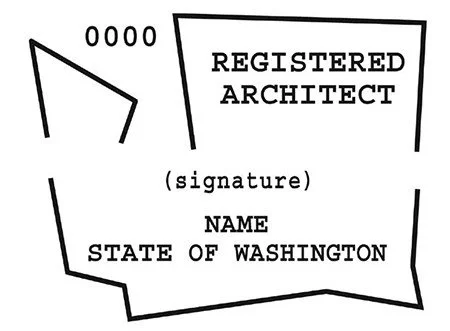
Digital Seals and Signatures by Josh Brincko

Dear Building Dept,

This page has been created this page to address your concerns regarding digital signatures. Please note that professional licenses, such as architects' and engineers' licenses are governed by the state, and administration of those requirements are under the jurisdiction of the state and not local governments. For several years, the state has allowed digital seals and signatures pursuant to the following provisions:

  1. RCW 18.43.70: http://app.leg.wa.gov/RCW/default.aspx?cite=18.43.070

  2. WAC 196-23-070(2): http://apps.leg.wa.gov/WAC/default.aspx?cite=196-23&full=true#196-23-070

  3. WAC 308-12-081(3): http://apps.leg.wa.gov/wac/default.aspx?cite=308-12-081 

  4. RCW 18.08.370 allows digital signatures and seals for architects per the requirements of: http://app.leg.wa.gov/RCW/default.aspx?cite=18.08.370

This is not a complete list of all provisions governing the use of digital signatures, but thank you for your consideration in accepting digital signatures and seals pursuant to the ordinances enacted by our state law. I would also encourage you to consider reviewing plans electronically to save paper, and I would be happy to help you instigate this into your protocols.

If you’d like to learn more about our design process, visit www.josharch.com/process, and if you’d like to get us started on your project with a feasibility report, please visit www.josharch.com/help
10 Construction Errors Architects Commonly Find by S. Joshua Brincko

It is very common that I find errors on a job site. That is part of an architect's job, and it's a good thing because I propose remedies to problems before they develop into catastrophes. I often spot construction mistakes before they even happen. Although many people think a building inspector is checking the whole project for your best interest, the inspector is not required or legally obligated to thoroughly review and protect the biggest investment you will ever make (your house). They are mainly just checking in to see if the builder has a minimum level of competence to apply the standards. 

As an architect, I need your project to turn out awesome for two reasons: 1. I need the great photos of the finished project for my portfolio, and 2. I need my clients to love their project, so they refer their friends and family to me. Well another reason: 3. It's just really fun to design cool buildings! I really care about the success of my clients' biggest investments, I accept their trust very seriously, and I am an expert in my field because of my extensive experience and knowledge. 

My involvement during the construction process does cost the client money, but it is negligible when compared to fixing a construction mistake. Builders typically have all the best intentions, but sometimes things get missed or some errors are out of a builder's control. Some of the builder's errors are even the client's fault at times for not giving the builder enough direction (by simply NOT authorizing the architect to manage the construction process). Even if an error is the builder's fault, fixing problems could still take months (of your time) to remedy. The person building your project works on one project at a time while an architect works on dozens of projects at a time and therefor sees a plethora of different construction methodologies in action. Since architects are faced with so many varying construction situations, we have vast experience to foresee potential problems before they arise. Although a builder's experience is more practical, architects see the big picture which also includes coordinating the work of various sub-contractors to make sure it all fits together. I also happen to have years of practical experience doing construction labor, so I thrive on a job site. Paying an architect for an hour to do a weekly job site meeting saves clients loads of money down the road, and I've listed the most common mistakes I see below:

  1. Inadequate crawlspace venting. You would be surprised at how many people end up with moldy crawlspaces. Rain and construction do not mix well. Postponing (or forgetting) crawlspace venting inevitably results in mold. Construction materials should not be wet, and if they are, they NEED a way to dry out. I can often spot these errors through construction photos or by simply driving by a job site (without even exiting my truck).

  2. Inadequate attic venting. Drink a beer on a hot day...what happens? The bottle gets wet on the outside. It's not sweat from your palms. It's not magical free beer. It's science, and it's called condensation. Cold attic + hot house = condensation. Condensation on your construction materials = mold if it does not have a way to dry out. This is where soffit vents, ridge vents, and mechanical vents come into play. Based on the size of the attic, there's a specific amount of ventilation needed at specific areas of the attic to keep the air adequately flowing, so this condensation can be evaporated before mold develops. I can calculate this in my sleep - don't let your builder just slap up some random vent strips.

  3. Inadequate insulation. You can insulate all you want, but if you leave a gap here or there, it's like having a hole in your house. Would you expect a winter jacket to keep you warm if you don't zip it? Of course not. Your insulation around your house works the same exact way. It must be continuous and tight. I have learned some strategies that allow your insulation to actually do its job, and this saves you big time on heating bills.

  4. Improper installation of weatherproofing. This one really bothers me. We build with wood mostly, and we know that wood swells and rots when it's wet. It has become common practice for builders to frame houses in the rain and cover it with house wrap: it's a white tarp-like material that they staple to the plywood. Staples put holes in the house wrap. The house wrap blows off with a little bit of wind leaving the wood exposed until they do the labor of re-installing it again and again and again which leaves more and more and more staple holes in it. The sun's ultraviolet rays degrade the house wrap in as little as three days. And perhaps the worse thing is that the house wrap is often installed over wet plywood which actually prevents the wood from ever drying out. There's better products and methods out there that I'd be happy to share with you. Just ask. Installation of windows, doors, and integrating different materials into one another is another area where the help of an architect is essential in the of weatherproofing of your project. Nobody wants leaks to develop a year or two or ten down the road.

  5. Ceiling framing that prevents lighting where you want it to be. You want recessed lights in the middle of your hallway? You better make sure the framers don't put a joist or rafter down the center of your hall. This happens a lot. The framers often don't refer to the whole set of plans to coordinate with the lighting, speaker, or duct locations, and this causes unnecessary compromises or costly rework. I work hard to spot these problems before they arise so everything integrates properly. It is the responsibility of the builder to do this, but they are less familiar with the concept which causes things like this to be overlooked.

  6. Door/window framing that will later cause awkward trim details. Have you seen a door trim in the corner of a hallway with a 1/4" strip of drywall next to it that is too skinny to paint? This comes down to careful planning, design detailing, and follow-through during construction to get these fine details to work well.

  7. Clients buying things that won't work. Clients get really excited about their projects - this is very understandable. Sometimes too excited though. Don't just buy a window or a refrigerator because it's a good deal. There's certain size requirements, insulation specifications, etc that must be followed for certain products to work. It's also not fun to move a refrigerator around from room to room during construction while trying not to damage the pretty stainless steel finish. Let it be your architect's fault or your builder's fault if something won't work by letting them buy it (at the appropriate time).

  8. Wet building materials that should not get rained on. This goes along with #4 above, but I see builders storing lumber on a muddy job site in the rain. The lumber should really be kiln dried to a certain moisture percentage and kept dry to ensure it will not host mold, mildew, and shrink and swell in unpredictable ways. You wouldn't want to see tile popping off of your wall or hardwood floors buckling because the framing behind them are shrinking and swelling.

  9. Wrong materials installed. A simple job site meeting is so helpful when it comes time to install finish materials. There are so many unique construction details where one material integrates with another that it's not possible (or practical) to depict it all on drawings. Or sometimes there's so many drawings and changes to drawings that builders overlook something that was planned. Would you rather have a builder guessing at your design details, or would you rather have your trained architect spend 5 minutes to provide the necessary direction?

  10. Builders not reading or improperly reading drawings. A picture is worth a thousand words, so it's understandable that things can be missed on drawings. There is so much information packed into a drawing that certain things can be missed while trying to read the plans on a dark, cold, windy, rainy, dusty, noisy job site. There's also decisions that are made that are not illustrated on the drawings. A weekly job site meeting is crucial to review progress and upcoming work to ensure the builder is aware of everything necessary on the plans before building it. I've also common unfortunately that builders never bother to print the drawings and therefor never read them. Sigh

If you’d like to learn more about our design process, visit www.josharch.com/process, and if you’d like to get us started on your project with a feasibility report, please visit www.josharch.com/help